How to Ensure Material Compatibility in Construction?

Time:2026-10-03 Author:Sophia
0%

Material Compatibility In Construction is often treated as a specification task, but it is also a risk-control discipline. Concrete, sealants, membranes, metals, and insulation interact under heat, moisture, pressure, and chemical exposure. A joint may look sound on handover day, then crack after repeated temperature changes. A hidden reaction can take months to appear.

The scale of the challenge is significant. UNEP’s 2023 Global Status Report for Buildings and Construction reported that buildings used about 34% of global energy and produced roughly 37% of energy- and process-related carbon emissions in 2022. These figures make durable material selection important for both performance and environmental impact. Poor compatibility can increase repairs, replacement waste, and operational disruption. It is rarely a small cost.

Good practice begins with evidence. Review manufacturer data, safety information, exposure conditions, and intended service life. Check thermal movement between adjacent materials. Examine moisture paths around roofs, façades, bathrooms, and below-grade walls. Where uncertainty remains, use sample panels, adhesion tests, or controlled laboratory testing. ASTM, EN, and ISO methods can support reliable evaluation, but they cannot replace project-specific judgment.

A checklist is not enough. Site records matter. So do installation temperatures, batch numbers, curing times, and photographs of concealed interfaces. Engineers should challenge attractive substitutions, even when products appear similar. This approach is not flawless; incomplete supplier data and rushed procurement still create blind spots. However, careful compatibility reviews can expose those weaknesses before they become leaks, corrosion, delamination, or premature failure. The goal is simple: materials should work together throughout the building’s real service life.
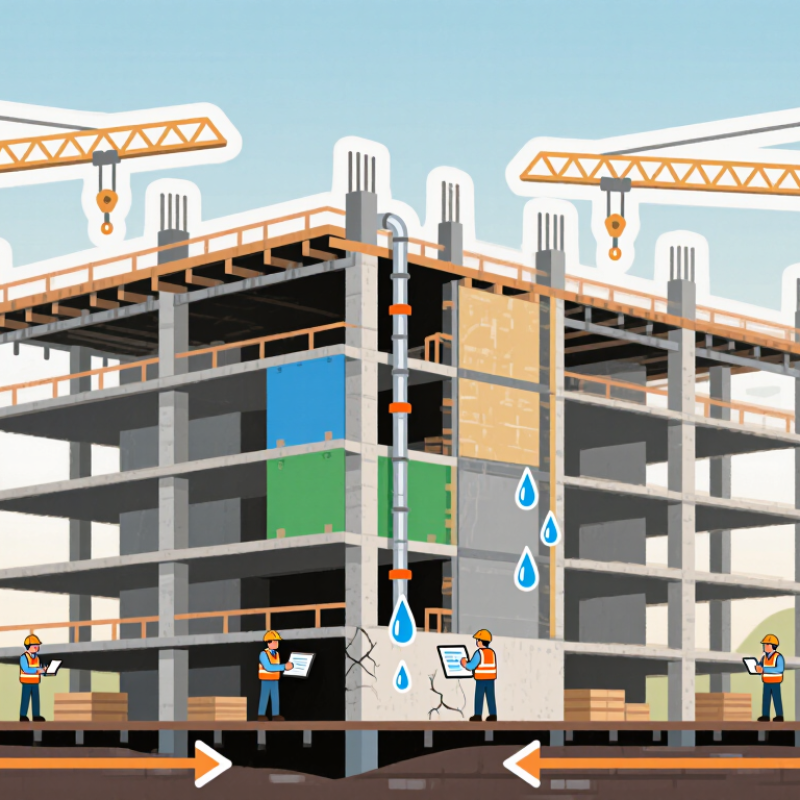
How to Ensure Material Compatibility in Construction?

Define Material Compatibility in Construction

Material compatibility in construction means that connected materials can coexist without causing premature damage, performance loss, or unsafe reactions. It includes chemical, physical, thermal, and moisture compatibility. For example, acidic concrete moisture may accelerate corrosion in unsuitable metal fixings. A rigid coating can also crack when applied over a substrate that expands and contracts differently.

Look closely at interfaces.

On site, compatibility is tested at joints, penetrations, and transitions. A waterproof membrane may bond well to concrete but fail against dusty masonry. Timber can absorb moisture beside an impermeable finish, creating concealed decay. Thermal movement matters too. A dark façade panel may heat rapidly, while its supporting frame remains cooler. Engineers should check manufacturer data, standards, substrate conditions, movement capacity, and expected exposure before approval.

The risk is substantial. The United Nations Environment Programme’s 2023 Global Status Report for Buildings and Construction states that buildings consumed about 34% of global energy and produced approximately 37% of energy and process-related emissions in 2022. Poor compatibility can shorten service life and increase replacement impacts. The Royal Institution of Chartered Surveyors’ Whole Life Carbon Assessment standard also treats product, construction, use, maintenance, and replacement stages as connected carbon sources.

The numbers expose an uncomfortable point.

A low-carbon material is not automatically a compatible material. Project teams should document pH, moisture content, temperature range, corrosion class, fire performance, and expected movement. Small mock-ups can reveal staining, debonding, or cracking before installation spreads the problem. Specifications often look complete, yet interfaces remain vague. That gap deserves deliberate review.

Identify Chemical, Physical, and Environmental Compatibility Risks

How to Ensure Material Compatibility in Construction?

Identify Chemical, Physical, and Environmental Compatibility Risks

Material compatibility starts before installation, not after the first stain appears. Chemical risks often hide between sealants, coatings, adhesives, and treated substrates. A sealant may soften when exposed to a solvent-based coating. Metal fasteners can also corrode beside damp, alkaline concrete. Review technical data, safety information, and project specifications before approving combinations. Small samples and controlled contact tests reveal problems early. Record curing time, surface preparation, temperature, and moisture levels.

Physical compatibility needs equal attention. Different expansion rates can create cracks around windows, joints, or large panels. Hard materials may damage softer membranes during movement or vibration. Check tolerances, joint width, flexibility, load transfer, and installation pressure. Environmental risks include ultraviolet exposure, freeze-thaw cycles, salt air, standing water, dust, and extreme heat. A laboratory result may not reflect a rooftop in winter. Field conditions matter.

Tips: Test the complete material assembly, not one product alone. Leave samples outdoors when weather exposure matters. Inspect them after one week, then again after several cycles. Look for swelling, discoloration, cracking, tackiness, rust, or loss of adhesion. Photograph each change and keep test conditions clear. I have learned that compatibility checklists can miss unusual site conditions. No checklist is perfect. Ask an experienced engineer to review uncertain results before installation, especially when replacement access is limited.

How to Ensure Material Compatibility in Construction? — Identify Chemical, Physical, and Environmental Compatibility Risks

Practical compatibility screening for common construction materials, based on typical service conditions. Always confirm suitability through project-specific technical data, exposure testing, and applicable standards.

Material Combination Chemical Compatibility Risk Physical Compatibility Risk Environmental Exposure Risk Overall Risk Typical Compatibility Status Recommended Control or Verification
Aluminum + Fresh Cement Concrete Fresh concrete is highly alkaline. Hydroxide attack can discolor or corrode unprotected aluminum and may generate hydrogen gas in severe conditions. Different thermal expansion rates can create movement at rigid interfaces. Embedded aluminum may also be affected by moisture retention. Persistent dampness, deicing salts, and chloride contamination increase corrosion risk. High Use with controls Separate aluminum from wet cementitious materials with a suitable barrier, provide drainage, and verify the detail with exposure testing.
Carbon Steel + Chloride-Contaminated Concrete Chloride ions can break down the passive film on embedded steel and initiate reinforcement corrosion. Corrosion products expand and can cause cracking, delamination, and loss of bond in concrete. Wet–dry cycling, marine exposure, and deicing salts accelerate corrosion. High Avoid unprotected exposure Control chloride ingress, maintain adequate concrete cover, limit cracking, and consider corrosion-resistant reinforcement or protection systems.
Copper + Galvanized Steel When electrically connected in the presence of an electrolyte, copper can promote galvanic corrosion of zinc-coated steel. Loss of the zinc coating can reduce fastener or connection durability and may cause loosening over time. Rainwater, condensation, coastal air, and other conductive moisture increase galvanic activity. High Use with controls Prevent direct contact, use compatible isolating washers or coatings, and avoid arranging copper runoff over galvanized components.
Stainless Steel + Carbon Steel Electrical contact in a wet environment can create a galvanic couple, accelerating corrosion of carbon steel. Different hardness and thermal expansion characteristics may affect bolted or moving joints. Chlorides and persistent moisture increase localized corrosion at the carbon-steel component. Medium Use with controls Isolate dissimilar metals where practical, select suitable grades, protect carbon steel, and design the joint to remain dry.
PVC + Aromatic Solvents Solvents such as toluene and xylene can soften, swell, or dissolve many PVC formulations. Softening may reduce strength, dimensional stability, and pressure capacity in pipes or membranes. Elevated temperature increases solvent diffusion and material degradation. High Generally unsuitable Check the chemical-resistance chart for the exact PVC formulation, temperature, concentration, and exposure duration before use.
EPDM Rubber + Petroleum-Based Oils Petroleum oils and fuels can cause swelling, softening, and loss of mechanical properties in EPDM. Swelling can reduce sealing pressure and cause extrusion or leakage at joints. Heat, UV exposure, and repeated immersion can accelerate deterioration. High Generally unsuitable Use an elastomer selected for hydrocarbon service, confirm compound compatibility, and test seals under actual temperature and pressure conditions.
Natural Rubber + Ozone and UV Exposure Ozone can attack unsaturated rubber chains and produce surface cracking, especially under strain. Cracking reduces elongation, flexibility, and sealing performance. Outdoor sunlight, ozone, heat, and cyclic weathering substantially increase the risk. High Avoid unprotected outdoor use Use an ozone-resistant elastomer or provide shielding, protective coatings, and a maintenance or replacement schedule.
Wood + Concrete or Masonry Alkaline moisture can stain or chemically affect some wood species and coatings; extractives may interfere with adjacent finishes. Wood shrinks and swells with moisture changes, while concrete and masonry undergo comparatively different movements. Trapped moisture can cause fungal decay, mold, corrosion of connectors, and dimensional distortion. Medium Suitable with detailing Provide capillary breaks, ventilation, drainage, adequate clearances, and moisture-content control before enclosure.
Gypsum Board + Persistent High Humidity Moisture can weaken paper facings and support biological growth; repeated wetting may damage internal bonding. Boards may sag, swell, lose fastener holding capacity, or deteriorate at edges. High relative humidity, condensation, and water leakage increase the probability of failure. Medium Use moisture-rated systems Correct the moisture source, use products rated for the exposure, seal penetrations, and maintain adequate ventilation.
Bituminous Membrane + Certain Plasticizers Plasticizer migration or solvent interaction may soften, stain, or weaken either material at the interface. Loss of tack, dimensional change, and interface slippage can compromise waterproofing continuity. High temperature, solar gain, and long-term pressure increase migration and aging effects. Medium Verify before installation Use a compatible separation layer where required and conduct a small-scale adhesion and staining test under expected conditions.
Concrete + Sulfate-Rich Soil or Water Sulfates can react with cement hydration products, producing expansive compounds and progressive chemical deterioration. Expansion may cause cracking, spalling, loss of stiffness, and reduced service life. Risk increases with water availability, permeability, temperature, and sustained sulfate exposure. High Design for exposure Characterize the exposure, reduce permeability, select an appropriate cementitious system, and follow the applicable concrete durability requirements.
Insulation Foam + Solvent-Based Adhesive Some solvents attack polymer foams, causing dissolution, shrinkage, or loss of cell structure. Dimensional loss can create gaps, thermal bridges, and reduced adhesion. Heat and enclosed conditions can increase solvent exposure and delay off-gassing. High Avoid unless approved Use an adhesive specifically approved for the foam type, conduct a compatibility patch test, and observe curing and ventilation requirements.
Glass + Differentially Moving Frames Sealant incompatibility can cause adhesion loss, staining, or chemical attack at the edge of the glass. Frame movement, thermal expansion, edge pressure, or inadequate clearance can cause glass breakage. Solar heating, wind load, temperature cycling, and moisture affect sealant and frame performance. Medium Suitable with system testing Allow movement, use compatible setting blocks and sealants, maintain edge clearances, and verify the complete glazing assembly.

Evaluate Materials Through Standards, Testing, and Documentation

Material compatibility begins with evidence, not visual similarity. Two gray coatings may react differently under heat, moisture, or alkaline concrete. On a recent assessment, a sealant looked sound but softened after repeated water exposure. Small tests prevented a costly replacement.

Check the governing standards for each material and use. Confirm strength, fire performance, chemical resistance, and dimensional movement requirements. Standards create a common language, but they do not replace project judgment. Site temperature and installation methods can change results. Use real samples. Request current technical data sheets, safety information, certificates, and batch records. Compare stated limits with actual site conditions. Ask who tested the sample, which method was used, and when the report was issued. Old documents can hide formulation changes.

Test representative combinations, not isolated products. Include joints, fasteners, proposed substrates, and surface treatments. Expose samples to moisture cycles, temperature shifts, cleaning agents, and load. Measure adhesion, discoloration, swelling, corrosion, and cracking. Photograph every stage. Label samples with lot numbers and dates. Independent laboratory testing adds credibility when risk is high. A qualified engineer should review unusual results before approval. We almost missed a compatibility issue because the laboratory used dry concrete, while the site was damp. That mistake changed our inspection plan. Document every change. Compatibility files should connect drawings, specifications, test reports, approvals, and site observations. If results conflict with a standard, pause installation and investigate. Guessing is expensive.

Plan Compatible Material Selection and Interface Design

How to Ensure Material Compatibility in Construction?

Plan Compatible Material Selection and Interface Design

Material compatibility begins before procurement. A wall rarely fails because one product is weak. It fails when adjacent materials react, move, or drain differently. On site, I have seen sealant detach from dusty concrete within weeks. The drawing looked complete. The interface was not.

A compatibility plan should map every contact zone. Check pH, moisture, temperature movement, chemical exposure, fire performance, and galvanic risk. Record each material’s substrate requirements and cleaning method. Then build a representative mock-up. Include joints, fasteners, membranes, drainage paths, and realistic curing conditions. Test the assembled interface, not isolated samples. ASTM and ISO test methods can support verification, but they cannot replace project-specific judgment.

The 2024 UNEP Global Status Report states that buildings consume 32% of global energy and produce 34% of global carbon emissions. The World Green Building Council’s Bringing Embodied Carbon Upfront report attributes about 11% of global emissions to materials and construction. Durable interfaces matter because premature replacement adds hidden environmental cost. I still question overly confident compatibility tables. Site dust, trapped water, and rushed sequencing can defeat laboratory results. A better record includes photographs, batch details, weather conditions, and test observations. Small evidence prevents large assumptions.

Material Compatibility in Construction: Thermal Expansion Matching

Representative linear thermal expansion coefficients show how different construction materials respond to temperature changes. Materials with closer values generally experience less differential movement at interfaces, helping reduce cracking, debonding, and sealant stress. Final selection should also consider moisture movement, chemical exposure, stiffness, and fastening details.

Monitor Compatibility During Installation and Building Use

Material compatibility does not end when products arrive on site. It must be checked during installation and throughout building use. A sealant may bond in a dry mock-up, then fail against alkaline concrete or persistent moisture. Field teams should verify substrate pH, surface temperature, moisture content, cure time, and contact materials before each application. Keep photographs and batch records with the inspection log. Small details matter here.

A compatibility matrix should name every adjacent material, exposure, and required test. Mock-ups need real joints, fasteners, cleaners, and weather cycles. Laboratory approval alone is insufficient.

NIST estimated inadequate interoperability cost U.S. capital facilities $15.8 billion annually in its Cost Analysis of Inadequate Interoperability report. That figure is old, but the lesson remains relevant: disconnected specifications create expensive surprises. Inspectors should compare approved samples with installed work, not memory. Our checklists are useful, yet they are never complete.

Building use can reveal delayed reactions. Facility staff should track staining, odor, corrosion, cracking, condensation, and changes in indoor humidity. Sensors can flag moisture before finishes blister, while scheduled inspections confirm what data cannot explain.

U.S. Department of Energy data indicates buildings consume roughly 40% of national energy use. Incompatible insulation, coatings, or air barriers can increase operating demand.

Record repairs, identify the failed interface, and update the compatibility matrix. A recurring leak deserves investigation, not another layer of sealant.

FAQS

When should material compatibility be checked?

Check compatibility before purchasing or installing materials. Review sealants, coatings, adhesives, fasteners, membranes, and substrates together. Small contact tests can reveal softening, staining, or poor adhesion. Do not wait for the first visible failure.

What chemical risks should construction teams examine?

Solvent-based coatings may soften certain sealants. Damp, alkaline concrete can accelerate metal corrosion. Cleaners may also damage membranes or coatings. Review technical data, safety information, pH, moisture, and chemical exposure. Small details matter.

Why are physical compatibility checks necessary?

Adjacent materials may expand at different rates. This movement can crack window joints, panels, or rigid finishes. Hard fasteners may damage softer membranes during vibration. Check joint width, flexibility, tolerances, pressure, and load transfer.

Which environmental conditions can cause material failure?

Ultraviolet exposure can weaken exposed surfaces. Freeze-thaw cycles may enlarge small cracks. Salt air, standing water, dust, and heat create additional stress. A rooftop test in winter may show more than a laboratory sample.

How should a realistic compatibility mock-up be built?

Include real joints, fasteners, membranes, cleaners, and drainage paths. Match expected curing times, temperatures, and moisture levels. Test the complete assembly, not one isolated product. Otherwise, the result may look better than reality.

What signs indicate an incompatible material interface?

Look for swelling, discoloration, cracking, tackiness, rust, or detached sealant. Blistered finishes may indicate trapped moisture. Record odors, condensation, and recurring stains. Photograph each change with the test date and conditions.

How can compatibility be monitored after installation?

Inspect substrates before each application. Verify pH, surface temperature, moisture, cure time, and contact materials. Keep batch records and installation photographs. During building use, monitor leaks, corrosion, humidity, and finish changes.

Are compatibility checklists completely reliable?

No checklist catches everything. Dust, trapped water, rushed sequencing, or unusual weather can defeat laboratory results. I still question overly confident compatibility tables. Ask an experienced engineer to review uncertain interfaces before installation.

Conclusion

Material Compatibility In Construction is the process of ensuring that building materials can work together safely, effectively, and reliably throughout a structure’s service life. It begins with understanding how materials interact and identifying chemical risks, such as corrosion or harmful reactions; physical risks, including movement, expansion, shrinkage, and differences in strength; and environmental risks caused by moisture, temperature changes, sunlight, or exposure to pollutants. Recognizing these issues early helps prevent premature damage, reduced performance, and costly repairs.

A reliable compatibility strategy combines applicable standards, laboratory or field testing, product data, and clear documentation. Designers and contractors should select materials with compatible properties and carefully plan joints, connections, membranes, coatings, and other interfaces. Compatibility must also be monitored during installation by controlling surface preparation, sequencing, storage, and workmanship. After completion, inspections and maintenance can identify changes in performance and address problems before they become serious, supporting the building’s durability, safety, and long-term functionality.

Sophia

Sophia

Sophia is a dedicated marketing professional with an exceptional depth of knowledge about her company's products and services. With a keen understanding of market trends and customer needs, she crafts insightful blog posts that not only inform but also engage readers, enriching the company’s online......